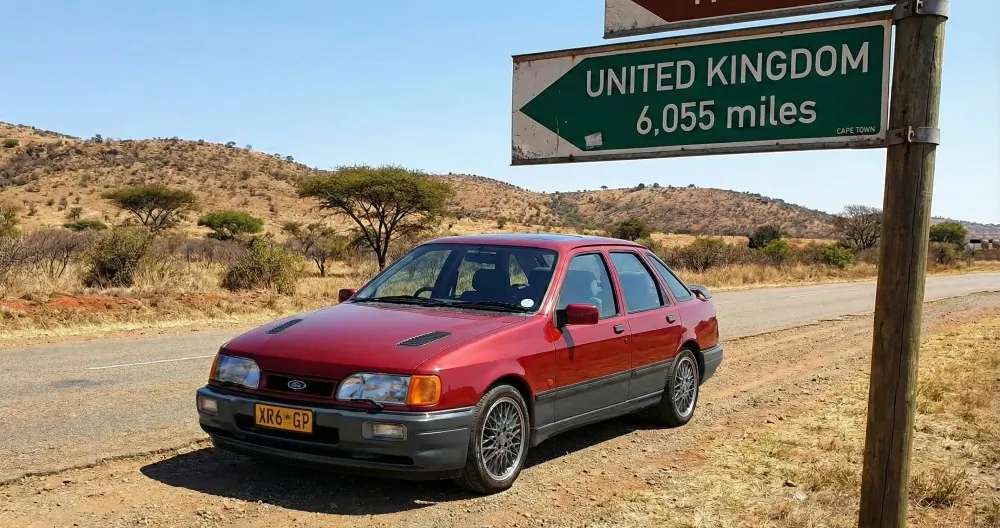
Why South Africa?
- Bone-dry Highveld climate means virtually zero rust on 40-year-old classics
- RHD market with strong British heritage - Defenders, Fords, Jaguars all built locally
- Favourable GBP/ZAR exchange rate stretches your budget significantly
- Unique SA-only models unavailable anywhere else (Sierra XR6, Citi Golf)
- Less competition than the saturated JDM import scene
When British enthusiasts think of importing a right-hand drive classic, eyes instinctively turn East to Japan. The JDM phenomenon has dominated the import scene for the past decade, and rightly so. But here's the thing: everyone else has cottoned on too.
South Africa remains the sleeping giant of the car import world. It offers something Japan simply cannot: a bone-dry climate that preserves metal like nowhere else, a treasure trove of British heritage models, and an exchange rate that makes your money go embarrassingly far.
The Highveld Factor: Where Rust Goes to Die
The biggest headache for any classic car owner in Britain is corrosion. We're used to welding sills, replacing floor pans, and wincing at MOT time. Japan's cars are generally well-maintained, but the humidity still takes its toll.
Now consider the South African Highveld.
Johannesburg and Pretoria sit at roughly 1,700 metres above sea level with humidity levels that would make a cactus feel at home. Cars that have spent their lives here simply do not rust. Full stop.
Finding a forty-year-old Ford Escort or Land Rover Series III with factory-fresh metal underneath isn't unusual - it's normal. For a British buyer accustomed to prodding sills with a screwdriver and hoping for the best, seeing an eighties chassis that looks like it left the production line last month borders on the surreal.
The Exchange Rate Advantage
In 2026, Sterling buys a lot of Rand. A classic Alfa Romeo GTV6 or Jaguar XJS in Johannesburg often lists for significantly less than its UK equivalent - and that's before you account for the superior condition. Your budget stretches further than you'd believe.